🚗🏍️ Welcome to Motoshare!

Turning Idle Vehicles into Shared Rides & New Earnings.
Why let your bike or car sit idle when it can earn for you and move someone else forward?

From Idle to Income. From Parked to Purpose.
Earn by Sharing, Ride by Renting.
Where Owners Earn, Riders Move.
Owners Earn. Riders Move. Motoshare Connects.

With Motoshare, every parked vehicle finds a purpose. Partners earn. Renters ride. Everyone wins.

Start Your Journey with Motoshare

Hot to Generate and Add an ssh Key for Secure Authentication

Generating and adding an SSH key for secure authentication involves a few straightforward steps. Here’s a guide to creating an SSH key, adding it to your local SSH agent, and configuring it for authentication with remote servers or services like GitHub, GitLab, etc.

Generate the SSH Key

When prompted to “Enter a file in which to save the key,” provide a custom path within the htdocs folder.

step1: Open Git Bash and run the following:
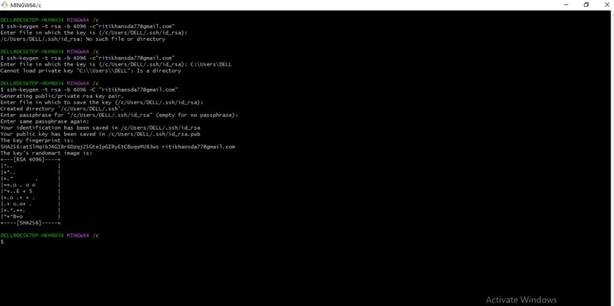
This command creates a new SSH key, using the provided email as a label.

This saves the private key as project_name_ssh_key and the public key as project_name_ssh_key.pub in the htdocs folder. When prompted to “Enter a passphrase,” type a secure passphrase or press Enter to skip.

Step 2: Add the SSH Key to GitHub or a Server
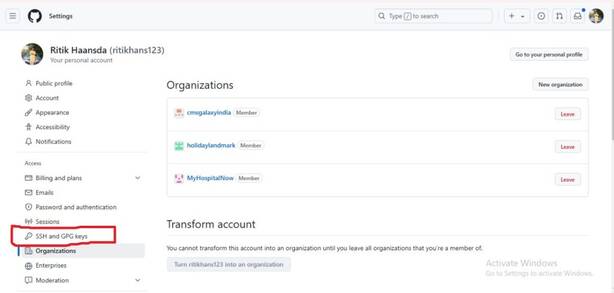
  • Log in to GitHub and navigate to Settings > SSH and GPG keys.
  • New SSH key, add a Title, paste the public key, and click Add SSH key.

For a Remote Server:

Copy the public key to the remote server’s ~/.ssh/authorized_keys file.

ssh username@server_ip

Append the key:

cat ./project_name_ssh_key.pub | ssh username@server_ip "mkdir -p ~/.ssh && cat >> ~/.ssh/authorized_keys"

Test the SSH Key

Test the connection to GitHub:

ssh -T git@github.com

Test the connection to a remote server:

ssh -i ./project_name_ssh_key username@server_ip

Test the SSH Key

Test the connection to GitHub:

ssh -T git@github.com

Test the connection to a remote server:

ssh -i ./project_name_ssh_key username@server_ip

Configure Git to Use the SSH Key (Optional)

If you’re using Git in the htdocs folder and want it to use the generated SSH key:

Add the key to the SSH agent:

eval "$(ssh-agent -s)"
ssh-add ./project_name_ssh_key

Configure Git to use this SSH key:

git config core.ssh Command “ssh -i ./project_name_ssh_key

Related Posts

Complete Guide to DevOps Certified Professional (Training & Certification)

The landscape of software engineering has shifted. We are no longer in an era where “knowing a bit of Linux” or “writing some scripts” is sufficient to…

The Path to Certified DevOps Manager (CDM)

Moving from an individual technical role into a leadership position is one of the most important transitions in a software professional’s journey. While strong skills in coding…

Complete Guide to Certified DevOps Architect

Introduction In today’s competitive IT landscape, organizations are embracing DevOps to streamline development, deployment, and operations. To stand out in this field, professionals need to demonstrate their…

Complete Guide to Certified DevOps Engineer (CDE)

Introduction The Certified DevOps Engineer (CDE) certification is one of the most sought-after credentials for professionals looking to specialize in DevOps practices. Whether you are an engineer,…

Certified DevOps Manager: A Comprehensive Guide

Introduction In today’s fast-evolving tech landscape, organizations face increasing challenges in implementing and scaling their DevOps practices. The need for strong leadership and efficient management within DevOps…

Certified DevOps Architect Skills for Modern Delivery

Introduction Teams often ship features faster than their platforms can handle. As a result, deployments fail, environments drift, costs rise, and security gaps slip into production. Moreover,…

0 0 votes
Article Rating
Subscribe
Notify of
guest
0 Comments
Oldest
Newest Most Voted
Inline Feedbacks
View all comments
0
Would love your thoughts, please comment.x
()
x